
Technical notes
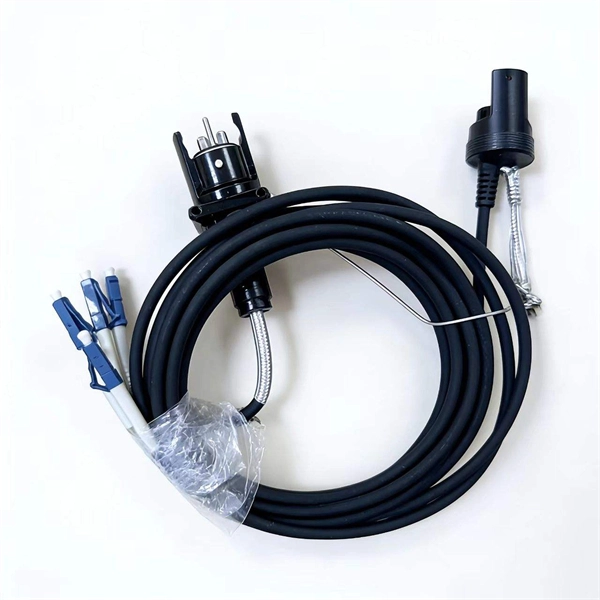
Air blown cable
This speci cation speci es the product classi cation, model, structure, technical parameters and test methods of optical and optical cables for communications, as well as the packaging and storage
Specification Sheet G657A1 Air Blown Optical Fiber Cable
G657A1 Air Blown Optical Fiber Cable Registered Office E 1, MIDC Industrial Area, Waluj, Aurangabad, Maharashtra, India – 431 136
Air Blown Optical Fiber Cable
The use of Air Blown Fiber Systems gives complete freedom from risk by pre-installing a ducting route and then blowing in the fiber element when required. The BLOLITE system is versatile with
Air Blown Fiber Cable
Air Blown Fiber Cable dedicated for FTTH systems with minimized diameter corresponding with AIRWAVE microducts diameters. Characteristic is advantageous proportion of fiber number in thin
Air Blown Fibre Unit (ABF/EPFU) G657A1 HDPE
Air Blown Fibre Unit (ABF/EPFU) G657A1 HDPE per stiffness, and it can be blown into the microduct of 5.0/3.5mm. The fibres are coated with a soft acrylate resin which provides excellent dimensional and
ABC Super Slim Design Air blown Fibre Optic Cable SM 144 core
Loose tube design provides stable and highly reliable transmission Parameters for a variety of voice, data, video and imaging applications. This lightweight cable offers durability and flexibility required for
B-LN | CommScope
Fiber Optic Cable, Outdoor Micro Cable for Air-blown installation, Stranded Loose Tube All-Dielectric. Click on image to enlarge.
P.N. 66504
VOYGAR ABC Super Slim Design Air blown Fibre Optic Cable SM 24-144core. This specification covers the general requirements of compact loose tube fibre optic Telecommunication cables for installation
Air-Blown Micro Optical Fiber Cable For FTTx Network
Stranded Loose Tube Air-blown Micro Fiber optic cable for FTTH fibers arc housed in a loose tube that is made of high-modulus plastic and filled with tube filling compounds.
Air Blowing Micro fiber Optic Cable
The Air Blowing Micro fiber Optic Cable product line is a complete solution with designs suitable for many applications and needs from backbone networks to FTTx.
Air Blown Fibre Unit
HOC has been devoted to developing and producing the air blown fibre cable since 2003. So far, it has produced various air blown fibre cable types which are of good performance and compose a
Introduction to Air Blown Optical Cable
Air Blown Optical Cable offers a revolutionary approach to optical fiber installation, providing numerous advantages over traditional cables. In this article, we will explore the concept of
The Comparison Between Air Blown Fiber Systems and Conventional Cabled
:: What Is Air Blown Fiber? Air Blow Fiber (ABF) systems claim to offer reduced cost, increased design flexibility and other advantages that cannot be matched by conventional optical fiber cables. ABF
What are the benefits and applications of air blown fiber optic cable
Conclusion Air blown fiber optic cable is a game-changer in modern network deployments. Its flexibility, rapid installation, cost-effectiveness, upgradability, reliability, and performance make it the go-to
VOYGAR Super Mini Air blown Fibre Cable.
VOYGAR supplies various types of air blown cable. Its main product is central tube air blown cable and layer stranding air blow cable which has absolutely technical advantage in Korea and equivalent air
Fiber Optical Micro Air Blown Cable
Advantages of Micro Air Blown Cable Technology Efficient Installation Air blown fiber technology leverages compressed air to install optical cables into microducts
Handbook Optical fibres, cables and systems
Effective area (Aeff ) is a parameter that is closely related to optical fibre non-linearities that will affect the transmission quality of the optical fibre systems, especially in long-haul, optically amplified systems.
How to install air blown fiber
When the Telecom operators, ISPs are designing and installing optical fiber cables, they need to have some spare fiber or spare space for future application, Air Blown Fiber (ABF) systems are well
Related Video Reference
This video was associated with the source search result. Verify technical details against current product documentation and project requirements.