
Technical notes
Understanding Baseband Units in Telecom | PDF | Radio | Modulation
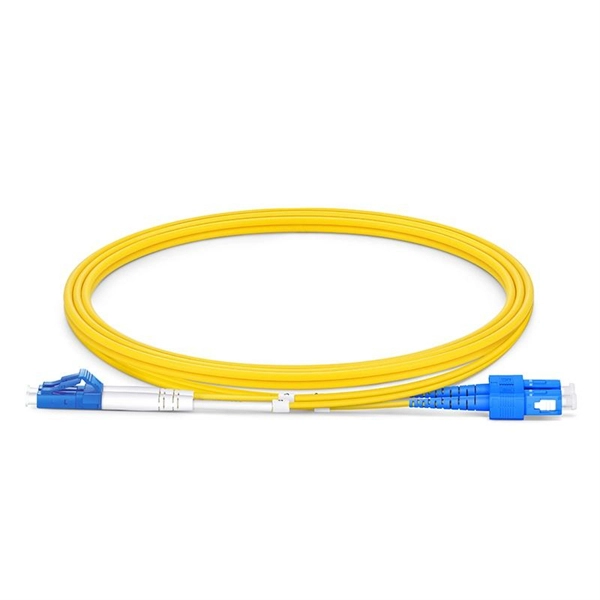
The BBU, along with the RRU (Radio Remote Unit), forms the BTS (Base Transceiver Station). The BBU is connected to the RRU via CPRI (Common Public Radio Interface) fiber cable.
What is RRU, BBU and Antenna?
The RRU is connected to the base station via the fiber optic link which is bi-directional link. The optical interface link is also known as CPRI
RRU Remote Optical Cable – Type II (Base Station Cable)
The cable is constructed by stranding 2 or 4 individual simplex optical cables together, which are then protected by an integrated outer jacket made of UV-resistant LSZH (Low Smoke Zero Halogen)
What is RRU and BBU
RRU and BBU are crucial components in base station construction, enabling a distributed architecture that improves efficiency.
Base transceiver station
A BTS is controlled by a parent base station controller via the base station control function (BCF). The BCF is implemented as a discrete unit or even incorporated in a TRX in compact base stations.
Remote Radio Unit RRU Optical Fiber Cable
Remote Radio Unit (RRU) Optical Fiber Cable takes the 2.0 simplex cable as the basic unit stranded with the filling cord, and the jacket is made of low smoke zero
Remote Radio Head, RRH for 4G & 5G
The RRH is connected to the Base band unit (BBU) via fibre optical cable which uses CPRI format signals. Optical cable is used because it has less loss and it is cheaper as compared to RF Coaxial
RRU & BBU Fiber Cable Installation Guide | PDF | Optical Fiber | Cable
This document provides guidelines for distributing and connecting optical fiber cables between remote radio units (RRUs) and baseband units (BBUs).
Baseband
A baseband signal or lowpass signal is a signal that can include frequencies that are very near zero, by comparison with its highest frequency (for example, a sound waveform can be considered as a
BBU (Baseband unit)
An integrated BBU is a compact unit that combines the radio and baseband processing functions into a single unit. This simplifies the installation and maintenance of the base station and
The Gear Page
Join a vibrant community of musicians and gear enthusiasts discussing instruments, effects, setups, and more on The Gear Page forum.
Optical Master Unit Mk. II
a fibre optical cable to the repeater. In the uplink direction, the OMU receives the signal from the remote repeater via the fibre optical cable, converts it to a RF signal and sends it back to the base station.
Wireless Radio Frequency Drawing Unit Optical Cable-Bynet
Bynet''s hybrid RF/fiber cable integrates optical fibers and RF coaxial lines for wireless base stations and DAS. It ensures low signal loss and easy installation in long-distance links.
Journal of Optical Communications
RoF is an analog optical link to trans-port information over optical fiber by transmitting modu-lated radiofrequency (RF) signals to and from central station (CS) to base station (BS) or remote antenna
OMU II Optical Master Unit
In the downlink direction, the OMU picks up the signal from the BTS, converts it into an optical signal and transfers it over a fibre optical cable to the repeater. In the uplink direction, the OMU receives the
Advanced Optical-Radio Communication System for 5G Base Stations
This research aims to create trustworthy, fast communication technologies for 5G and beyond. The design investigates the possibilities of Free-Space Optical (FSO) communication
Wavelength reuse in the WDM optical interface of a millimeter-wave
A novel technique for wavelength reuse has been proposed to simplify the upstream optical interface of an antenna base station in a millimeter-wave fiber-wireless system incorporating
OMU Optical Master
Fiber er. In the uplink direction the OMU receives the signal from the repeater via the fiber optical cable, converts it to a RF signal and sends it back to the base stat 4). If additional repeaters are to be fed