Skip to content
QK FIBERSystems Send a project enquiry
Reference library

Cable and Optical Fiber Manufacturing Process

Published
  • Cable
  • Optical
  • Fiber
Source context

AI source overview

Optical fiber and cable production involves transforming ultra-pure glass into high-performance fibers, coating and assembling them into cables for high-speed data transmission, supported by precision equipment and rigorous quality control.

Materials and Preform Production

The production of optical fibers begins with ultra-pure silica (SiO₂), often derived from silicon tetrachloride (SiCl₄), which forms the core and cladding of the fiber. Dopants like germanium tetrachloride (GeCl₄) increase the refractive index of the core, while fluorine compounds reduce the cladding's refractive index to enhance light confinement. Preforms, cylindrical glass rods typically 1–2 meters long, are created using techniques such as MCVD (Modified Chemical Vapor Deposition), OVD (Outer Vapor Deposition), and VAD (Vapor Phase Axial Deposition).

The preform's structure mirrors the final fiber, scaled up hundreds of times, and its purity is critical to minimize signal loss and attenuation ( ).

Fiber Drawing and Coating

Once the preform is prepared, it is heated in a fiber drawing tower to produce hair-thin fibers. These fibers are immediately coated with protective layers to maintain mechanical strength and prevent microbending. Coatings are applied using precision machinery, and fibers are tested for attenuation, tensile strength, and optical performance.

Advanced equipment allows real-time monitoring of fiber length and quality, reducing scrap and ensuring consistent performance ( ).

Cable Assembly

Fibers are then assembled into cables with strength members, buffer tubes, and protective jackets. Depending on the application, cables may be single-mode (SMF) for long-distance transmission or multi-mode (MMF) for shorter distances, such as data centers. High-density cables, including MPO trunk cables, are manufactured for modern high-bandwidth applications.

The assembly process includes stranding, jacketing, and rigorous testing to ensure durability, flexibility, and signal integrity ( ).

Equipment and Automation

Modern production relies on specialized machinery for preform fabrication, fiber drawing, coating, ribbon making, and proof testing. Companies like Rosendahl Nextrom provide integrated solutions for complete fiber optic cable production, including real-time quality monitoring and automated control systems to optimize fiber length and reduce defects ( ).

Industry Context

The fiber optic cable production market is valued at $3. 8 billion, driven by demand for high-speed telecommunications, data networks, and specialized applications. Manufacturers face challenges in precision engineering, material science, and tariff impacts on glass and equipment imports.

Competitive advantages are achieved through advanced optical design, precision manufacturing, and specialized cable constructions that meet high bandwidth, low latency, and ruggedized installation requirements ( ).

Conclusion

Cable and optical fiber production is a highly technical, precision-driven industry that transforms raw silica into fibers capable of transmitting terabits of data. From preform creation to fiber drawing, coating, and cable assembly, each step is critical to ensure performance, reliability, and durability. With growing global demand for high-speed connectivity, innovations in materials, equipment, and manufacturing processes continue to advance the capabilities of fiber optic infrastructure ( ).

Research context

Reference summary

Optical Fiber Manufacturing Process And MethodsAdhering to exacting quality standards is paramount when fabricating the optical fiber and protective cable.

From reference to enquiry

Questions for your project

Use these editorial prompts alongside the linked excerpts. They identify items to confirm for your project.

Technical notes

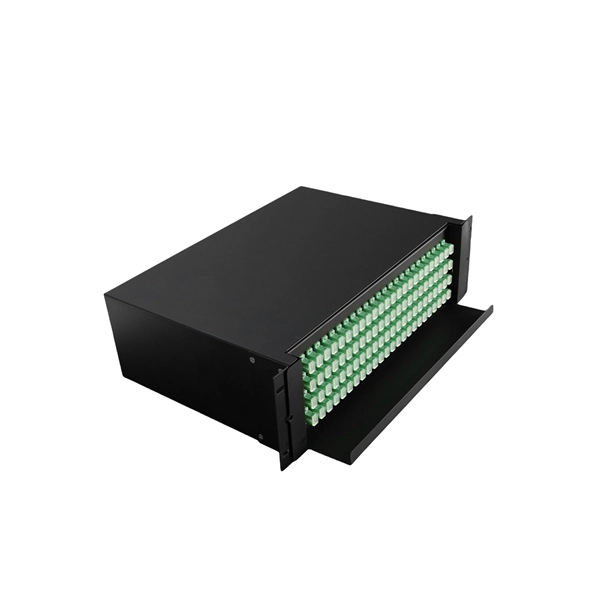
Illustrative equipment image

Optical Fiber Manufacturing Process And Methods

Adhering to exacting quality standards is paramount when fabricating the optical fiber and protective cable assembly. Consistent precision is required

Fiber Optic Cable Manufacturing Process: How They

In this blog, we''ll take a closer look at the step-by-step fiber optic cable manufacturing process, the materials used, and why these cables are so

Optical Cable Manufacturing: A Deep Dive into the

Explore the optical cable manufacturing process. Learn about raw materials, fiber drawing, cabling, and quality control in modern optical cable

How Are Optical Fibers Made, Step by Step?

Optical fibers start as a glass rod and get stretched into strands thinner than hair. Here''s how the whole process works, from raw materials to finished cable.

Optical Fiber Manufacturing: From Preform to Final Fiber Process

Explore the optical fiber manufacturing steps: preform production (MCVD, OVD) and fiber drawing. Learn how high-purity materials and precision techniques create low-loss fibers for telecom

Steps in Fiber Optic Cable Manufacturing Process

Explore the intricate steps and materials in fiber optic cable manufacturing process. Learn about cable testing methods and quality control.

Optical Fibre Manufacturing Process

Optical Fibre Cable Manufacturing Process Optical fibres in a cable are normally protected in one of two ways, either being tight buffered or contained in loose tubes.

How Optical Fiber Is Made: The Manufacturing Process

Manufacturing this waveguide requires a sequence of sophisticated steps, each demanding precision and material purity to ensure optimal performance. The functionality of an

Exploring the Fiber Optic Cable Manufacturing Process

In short, the construction of fiber optic cables is a highly specialized and advanced level procedure. Each step, starting from the preform fabrication to final quality assurance tests, needs to

Fiber Optic Cable Manufacturing Process: A Detailed Overview

Fiber optic cables have revolutionized data transmission, providing high-speed, reliable communication over long distances. The manufacturing of these cables is a complex process that

Fiber Optic Cable Manufacturing Process: How They

Discover how fiber optic cables are made, from silica preforms to final testing, and explore their key applications across telecom, industry and smart cities.

How Fiber Optic Cables are Made

In this video series, we delve into the intricate process of manufacturing the fiber optic cables that are essential for our connected world.

Full Process of Optical Fiber Cables Making

In this video, we take you inside the factory to show the full process of optical fiber cable manufacturing. From raw materials to

Optical Fibre Manufacturing Process

Optical Fibre and Cable Testing Performance verification forms an integral part of the manufacturing of optical fibre. The capability of each length of optical fibre to meet the required optical, geometrical,

The Complete Guide to Fiber Optic Cable Manufacturing: Powering

Introduction The digital revolution continues to drive unprecedented demand for high-speed, reliable data transmission. At the heart of this transformation lies fiber optic cable

Fiber Optic Cable Manufacturing Process

A complete look at the manufacturing process of fiber optic cables in 2026. This educational documentary covers every step of production in a modern industrial facility.

Manufacturing of Ribbon Fiber Optics Cable : Ten Step process

Fiber optics refers to the technology of transmitting light down thin strands of highly transparent optical fibers, usually glass but sometimes plastic. Step by Step process of

How Are Fiber Optic Cables Made? Manufacturing Process Explained

How are fiber optic cables made? C&C Partners — a structured cabling and security systems integrator with 30 years of experience in Poland and Central Eastern Europe — walks through the

Related Video Reference

This video was associated with the source search result. Verify technical details against current product documentation and project requirements.

Share your network requirements

Share the fiber interfaces, termination capacity, cable route and evidence required for handover.

Send a project brief