Skip to content
QK FIBERSystems Send a project enquiry
Reference library

Data Center Two-Story Solution

Published
  • Data
  • Center
  • Two-Story
Source context

AI source overview

A two-story data center maximizes space efficiency and reduces land costs while requiring careful planning for power, cooling, and structural support. OverviewTwo-story or multi-story data centers are increasingly adopted in urban areas where land is limited or expensive. Unlike traditional single-story facilities, these designs stack server halls, power systems, and ancillary spaces vertically to optimize the building footprint and accommodate more IT equipment on the same plot of land.

This approach is particularly useful in cities like London, New York, Paris, and Singapore, where real estate constraints make horizontal expansion impractical.

Key Benefits

Space Efficiency: Vertical stacking allows more server floor area without increasing land usage, which is critical in high-cost urban locations. Cost Savings: Reduces the need to purchase additional land and can lower construction costs per square foot of IT space. Sustainability: Multi-story designs can improve cooling efficiency by reducing the ratio of server space to building surface exposed to sunlight, potentially lowering energy consumption.

Proximity to Users: Urban multi-story data centers can provide low-latency access for city-based applications and businesses.

Design Considerations

Structural Support: Floors must support the heavy weight of IT equipment, UPS systems, generators, and cooling infrastructure. Power Distribution: Medium voltage (MV) distribution is often used to minimize cable riser sizes and allow strategic stacking of low voltage (LV) and UPS rooms. Cooling and Airflow: Efficient cooling requires careful planning of airflow, including the use of remote radiators or centralized cooling systems to manage heat rejection in stacked floors.

Equipment Placement: Heavier items like generators, fuel, and water tanks are typically located on the ground floor or basement to reduce structural load and simplify maintenance. Vertical Circulation: High-capacity lifts and stair cores are essential for moving IT equipment, personnel, and firefighting resources between floors. Ancillary Spaces: Security, fire control rooms, loading docks, and utility access points are usually placed on the ground floor for accessibility.

Challenges

Complex Construction: Multi-story data centers require specialized floor designs and structural reinforcement to handle concentrated loads. Equipment Installation: Lifting heavy electrical and cooling equipment to upper floors adds complexity and cost. Maintenance Access: Vertical layouts necessitate careful planning of lifts, stairways, and service shafts to ensure safe and efficient maintenance.

Integration of Generators: Incorporating generators within the building envelope requires careful airflow management and fuel distribution planning.

Conclusion

A two-story data center solution is a practical response to urban space constraints and rising land costs. While it offers significant benefits in terms of space utilization, cost efficiency, and sustainability, it also demands meticulous planning for structural support, power distribution, cooling, and equipment logistics. Properly designed, these facilities can deliver high-density, low-latency computing environments suitable for modern enterprise and hyperscale applications.

Research context

Reference summary

Build it high: The rise of multi-story data centers There's a substantial history of multi-story data centers in locations like London, New York and Paris.

From reference to enquiry

Questions for your project

Use these editorial prompts alongside the linked excerpts. They identify items to confirm for your project.

Technical notes

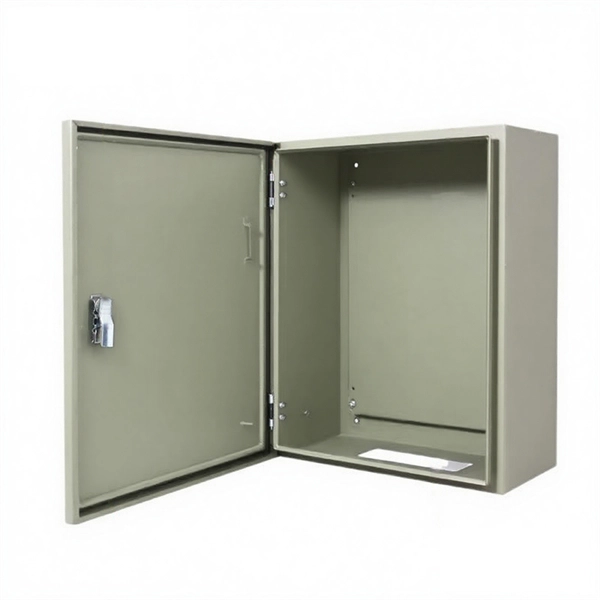
Illustrative equipment image

Build it high: The rise of multi-story data centers

There''s a substantial history of multi-story data centers in locations like London, New York and Paris. And on a small urban island like Singapore, there

Maximising space with multi-storey data centres

In doing so, data centre developers can maximise the use of the available land to accommodate a larger building. A further advantage is the

The multistory data center—current trends behind “building up”

This becomes yet another influencing factor in the rise of the multistory data center model. As affordable and desirably located land begins to wane in the U.S., expect to see a rapid

Modern Data Center Solutions

Run, secure, and scale modern workloads to support your core initiatives with essential Cisco infrastructure that delivers consistent performance and control across the entire data center.

Data Center Multi-Tier Model Design

The enterprise data center contains at least one aggregation module that consists of two aggregation layer switches. The aggregation switch pairs work together to provide redundancy and to maintain

Solutions for Data Centers

Click on the lifecycle image to explore projected benefits of using Sika solutions through the various stages of this hypothetical data center building''s lifetime.

Hyperscale data center designs

Our hyperscale offering is a one or two-story structure with two to four data halls. Additional office and support space can be configured to customer specifications.

Data Center Solutions and Networks | Schneider Electric

Our reliable, efficient, high-performing data center network and solutions: infrastructure, optimization, and critical services. Delivering excellence in data center management. | Schneider Electric

5 Data Center Design Patterns for Multiple Locations

Learn how to design your data center architecture for multiple locations. Discover the benefits and drawbacks of five data center design patterns.

Cisco Data Center Infrastructure 2.5 Design Guide

This chapter provides details about the multi-tier design that Cisco recommends for data centers. The multi-tier design model supports many web

The $7 trillion race for AI data center infrastructure

We explore how the global demand for AI data center infrastructure is fueling a $7 trillion race to power the future of artificial intelligence.

What is a Data Center

A data center is a secure, redundant facility for storing and sharing applications and data. Learn how they are changing to keep up with our computing needs.

Startup Patents Multi-Story Modular Data Center Design

Quebec-based Vert has secured a U.S. patent for a multi-story modular data center design it hopes will appeal to companies needing high-density data centers in places with limited

North America Data Center Trends H2 2025

Get the latest insights on the North America data center market, including record-breaking demand, supply growth, and increasing average asking rates. Understand how AI is

Evolution of Data Center Design: Modular Construction

Reframing Data Center Construction Modular design and construction have proven beneficial for data center architecture, aligning with the

Data Center Redundancy: N, N+1, 2N, and 2N+1

Data Center Redundancy Configurations Data center redundancy configurations or topologies refer to the design and implementation of backup systems and

Layer 2 Data Center Interconnect options

For more than 20 years we have been using Layer 3 connectivity powered by dynamic routing protocols to route traffic between data centers, but adoption of virtualization and geo

AI-ready data centers

Purpose-built full-stack data center systems for AI and enterprise workloads. Optimize performance, security, and operations while managing costs.

Share your network requirements

Share the fiber interfaces, termination capacity, cable route and evidence required for handover.

Send a project brief