
Technical notes
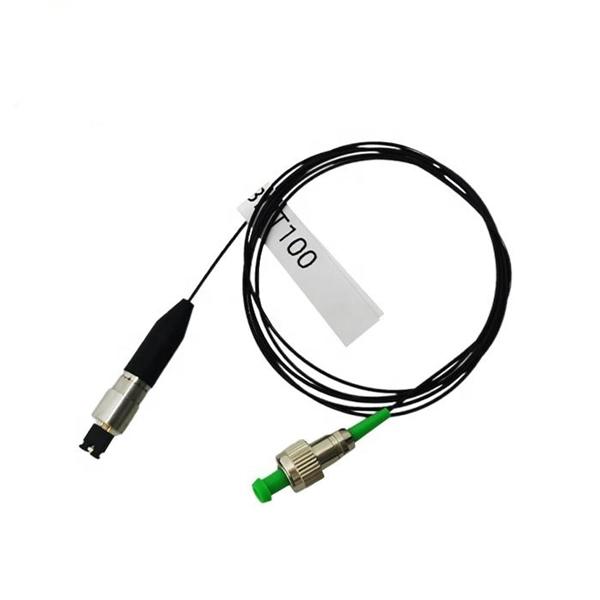
Fiber optic FBG sensor, fiber Bragg grating sensor for temperature
A Fiber Bragg Grating (FBG) sensor is an optical device inscribed in a fiber using a UV laser pattern. Acting as a wavelength-selective mirror, it reflects a specific wavelength that shifts in response to
Fiber Bragg Grating Temperature Sensor
This example demonstrates a temperature sensor based on fiber Bragg gratings (FBG). The temperature-dependent change of the refractive indices of the fiber, consequently the shift of its
Fiber Bragg Grating Sensors: Design, Applications, and
Additionally, this review compares FBG sensors with other sensing technologies and highlights recent innovations in design, packaging, and
FBG Temperature Sensors | Optromix
Fiber Bragg Grating (FBG) Temperature Sensors specialize in measuring temperature changes with high precision. Its operating principle is based on the
Temperature Sensing
While the temperature range easily raise up to several hundreds of degrees Celsius and where rapid changes occur, fiber optic temperature sensing overcomes
Fiber Optic Sensor | FBG Sensors for Temperature
Used in fiber optic sensor systems with a portable FBG interrogator, it is flexible, scalable, and ideal for physical security, intrusion monitoring, or structural
FBG Interrogators for fiber-optic-measurement
Several FBGs (typically 15 to 20) can be written into a single fiber and read out simultaneously with one system. This technology allows temperature monitoring
Recent advancements in fiber Bragg gratings based temperature and
In this paper, our objective is to review the various techniques to measure the temperature and strain using FBGs in different industrial sectors. An In-depth analysis of FBG is also incorporated
imc FBG-Temp
Fiber optic temperature sensor using FBG technology (Fiber Bragg Grating) The fiber-optic temperature sensor imc FBG-Temp is especially suited for use with the CAN measurement module imc
Fiber-optic temperature sensing System with extended measurement
This work introduces a fiber-optic temperature sensing system that synergistically combines a Sagnac interferometer (SI) and a Fiber Bragg Grating (FBG) within a fiber ring laser
Highly Sensitive FBG‐Based Sensor for Temperature
Therefore, this paper presents a fiber Bragg gating (FBG)–based sensor designed for demanding novel applications, such as temperature measurements in biotechnology. We propose a highly sensitive
Fiber Bragg grating as a temperature sensor for human body
Fiber Bragg grating (FBG) sensors exhibit sensitivity to various environmental factors, including temperature, stress, bending, and pressure. High-precision sensors have been extensively
Highly Sensitive FBG-Based Sensor for Temperature
We propose a highly sensitive temperature sensor in the near-infrared range made from germanium-doped silica core optical fiber, which provides high-performance properties.
Investigation on FBG based optical sensor for pressure and temperature
Optical fiber Bragg grating (FBG) sensors have advanced significantly in the last several years. The use of innovative FBG in temperature and pressure measurement is examined in this
Fiber optic FBG sensor, fiber Bragg grating sensor for
IDIL offers fiber optic FBG sensors for measuring temperature, strain, and physico-chemical parameters in industrial and harsh environments. Contact us!
Investigation on fiber optic sensor using FBG for various temperature
These issues could be minimized with the implementation of fiber optic sensor. This project is to design and implement optical sensor using FBG for various temperature and liquid
(PDF) A FBG Based Sensor-based Temperature monitoring system
In this report, using fiber Bragg Grating (FBG) approach a temperature monitoring system is been proposed. This is been done using OptiSystem Simulation software. FBG was
Fiber Bragg Grating Temperature Sensor and its
A target-type cantilever based temperature compensated fiber Bragg grating (FBG) flow sensor is designed and developed with economical
Related Video Reference
This video was associated with the source search result. Verify technical details against current product documentation and project requirements.