
Technical notes
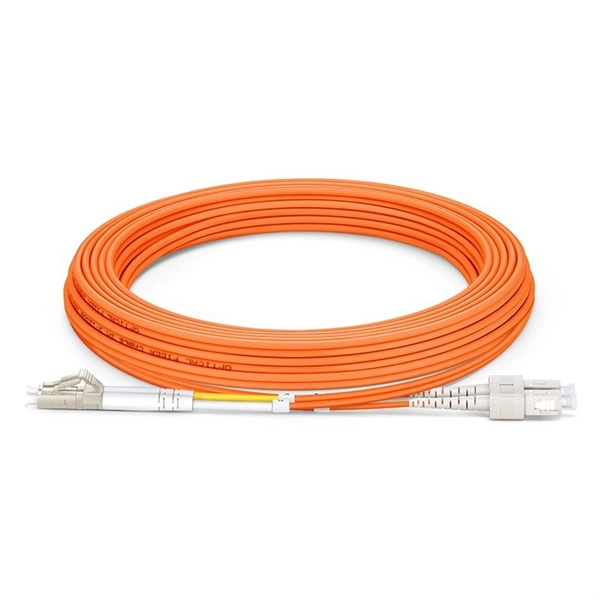
Fiber Optic Cable Bandwidth: Capacity, Speed, and
But understanding fiber optic bandwidth, what drives it, what limits it, and how to choose the right setup for your organization is what will determine if
What are the theoretical speed limits of fiber optic, cable and DSL?
Fiber internet speeds can range from 100 – 50,000 Mbps, depending on your provider. Some of the most popular fiber providers are AT&T, which offers speeds from 300 – 4,700 Mbps, and
Exploring Fiber Optic Bandwidth Capacity and Limitations
Fiber''s bandwidth is noteworthy in and of itself, but why? In this article, we''ll explore what fiber''s bandwidth is, why it''s so effective, and the maximum length and capabilities of fiber cables.
Bandwidth – optical spectrum, telecom fiber
Although a large data transmission rate is not possible without a large optical bandwidth, different communications devices can differ substantially in terms of spectral efficiency, i.e., concerning what
Breaking the Limits: Pushing the Boundaries of Bandwidth with Fiber
In this blog post, we delve into the remarkable journey of fiber optic cables, exploring how they are pushing the boundaries of bandwidth and revolutionizing the way we communicate.
Understanding Fiber Optic Transmission Windows and Wavelength
Optical transmission windows are specific wavelength ranges where light travels through fiber with minimal attenuation (signal loss) and dispersion (distortion). These low-loss windows are
What is the Bandwidth of Fiber Optic Cable
Fiber optic cable is now the backbone of modern communication. It makes our internet faster, connects cities with huge data networks, and even
OPTICAL FIBER COMMUNICATION
Fibre Optics Material Choice? H.H.Hopkins and N.S.Kapnay in 1950''s used cladding fiber: Good image properties demonstrated for 75 cm long fiber [Nature 173, 39 (1954)]. Application found use in
Multi-mode optical fiber
Multi-mode optical fiber is a type of optical fiber mostly used for communication over short distances, such as within a building or on a campus. Multi-mode links can be used for data rates up to 800 Gbit/s.
Capacity Limits of Information Transport in Fiber-Optic Networks
The instantaneous optical Kerr effect in optical fibers is a nonlinear phenomenon that can impose limits on the ability of fiber-optic communication systems to transport information. We present
Breaking the Limits: Pushing the Boundaries of Bandwidth with Fiber
At the forefront of this evolution stands fiber optic cables, the unsung heroes of the digital age. In this blog post, we delve into the remarkable journey of fiber optic cables, exploring how they
optical fiber bandwidth | Springer Nature Link
In multimode optical fibers, the bandwidth is limited by modal distortion and material dispersion. In single-mode optical fibers, the bandwidth is limited by material dispersion and
What are the theoretical speed limits of fiber optic, cable and DSL?
Believe it or not, those speeds are only scratching the surface of what fiber optic internet could theoretically do. In July 2021, researchers at Japan''s National Institute of Information and
Basics of Fiber Optics
Fiber optics provides many advantages over copper conductors including higher bandwidth, transmission of signals over longer distances, lower weight and cost and immunity from
Optical Bandwidth
3.2.1 Optical bandwidth Optical fiber communication systems use carrier frequencies in the near-infrared region of the electromagnetic spectrum. The typical value of the optical carrier
Fiber Optic Data Rates Reach New Record Speed
By broadening fiber''s communication bandwidth, the team has produced data rates four times as fast as existing commercial systems—and 33 percent better than the previous world record.
How does fiber optics work?
An easy-to-understand introduction to fiber optics (fibre optics), the different kinds of fiber optic cables, and how light travels down them.
Bandwidth in Fiber Optic Networks: Capabilities, Applications, and
Fiber optic bandwidth refers to the data-carrying capacity of fiber optic networks, measured in bits per second (bps). Unlike traditional copper-based systems, fiber optics transmit data as pulses of light
Related Video Reference
This video was associated with the source search result. Verify technical details against current product documentation and project requirements.