
Technical notes
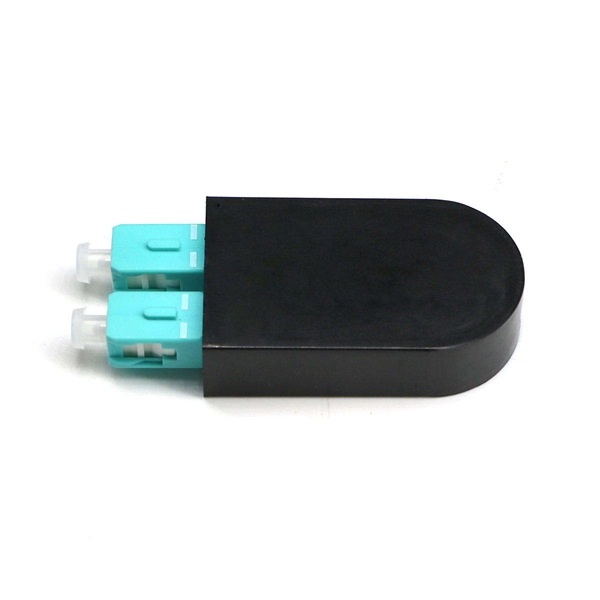
Fiber Optic Sensor
Fiber optic sensors are defined as devices that utilize optical fibers to measure a variety of stimuli, including mechanical, thermal, electromagnetic, radiation, chemical, and flow characteristics.
Fiber-optic sensor
Optical fibers can be used as sensors to measure strain, temperature, pressure and other quantities by modifying a fiber so that the quantity to be measured modulates the intensity, phase, polarization, wavelength or transit time of light in the fiber. Sensors that vary the intensity of light are the simplest, since only a simple source and detector are required. A particularly useful feature of intrinsic fiber-optic sensors is that they can, if required, provide distributed sensing over very large distances.
Fiber Optic Sensors: Types, Working Principle
What is a Fiber Optic Sensor? A fiber optic sensor measures a physical quantity by modulating the intensity, spectrum, phase, or polarization of light traveling
Review of Optical Fiber Sensors: Principles, Classifications and
The distributed optical fiber sensor (DOFS) architecture enables information to be collected using just a single optical fiber along its entire length, functioning as a continuous sensor.
Introduction to Fiber Optic Sensing
The fiber serves as sensor over its entire length, delivering real time information on physical surroundings and security. Furthermore, the data pinpoints the precise location of events and
Fiber Sensors
The sensing section of a Fiber Unit has no electric circuits. This makes it highly reliable even under severe environmental conditions, such as temperature, vibration, shock, water, and electrical noise
Fiber Optic Sensors | KEYENCE America
Fiber optic sensors are compact because the detection circuit is located in the amplifier, allowing for detection even in narrow spaces. Installation and adjustment are easy and the devices have high
Optical Fiber Sensors and Sensing Networks: Overview of the Main
Interferometric optical fiber sensors, also referred to as interferometer sensors, are phase-modulated sensors that measure the interference of the optical fiber light.
Turning Fiber into a Sensing System: The Magic of
From energy and transportation to agriculture and cybersecurity, fiber sensing is quietly revolutionizing industries with applications once thought
Fiber-Optic Point-Based Sensor Using Specklegram Measurement
Here, we report a fiber-optic point-based sensor to measure temperature and weight based on correlated specklegrams induced by spatial multimode interference. The device is realized
Optical Fiber Sensors and Sensing Networks: Overview of the Main
Optical fiber sensors present several advantages in relation to other types of sensors. These advantages are essentially related to the optical fiber properties, i.e., small, lightweight,
Optical Fiber Sensors: Working Principle, Applications,
Brief theory of sensing principle, fabrication method, applications, advantages and disadvantages of the different fiber-optic sensors, are
Multi-point fiber-optic refractive index sensor by using coreless
Compared with other aforementioned fiber refractometers, the fabrication of this multi-point fiber optic interferometer is simple and cost-effective, this multi-point sensor also can applicable
Optical Fibre-Based Sensors—An Assessment of Current Innovations
Optical fibre sensors are an essential subset of optical fibre technology, designed specifically for sensing and measuring several physical parameters. These sensors offer unique
What is a fibre optic sensor? | Sensor Basics: Principle
This site provides information useful for people involved in manufacturing to select sensors. A fibre optic sensor is a photoelectric sensor with optical fibre connected to its light source. It allows flexible
Optical Fiber Sensors for High-Temperature Monitoring: A Review
High-temperature measurements above 1000 °C are critical in harsh environments such as aerospace, metallurgy, fossil fuel, and power production. Fiber-optic high-temperature sensors are
A curvature fiber optic sensor with expandable measurement points
This work presents an expandable fiber optic curvature sensor. The sensor achieves multi-point curvature measurements by cascading different lengths o
Optical Fibre-Based Sensors—An Assessment of Current Innovations
Since the 1980s, the use of fibre-optic sensors has steadily expanded across a range of applications. The underlying sectors have seen considerable advancements in distributed fibre-optic sensors,