
Technical notes
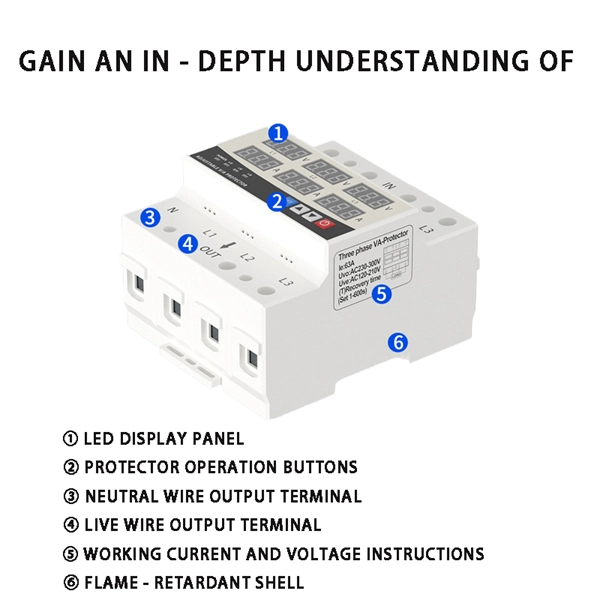
Modern Relay Protection Control Applications
Zone Selective Interlocking (ZSI) scheme allows for upstream and downstream protective devices to have identical trip settings with an established delay to allow for point to point communication
Protective relay
OverviewTypes according to constructionOperation principlesRelays by functionsPower source
Electromechanical relays can be classified into several different types as follows: "Armature"-type relays have a pivoted lever supported on a hinge or knife-edge pivot, which carries a moving contact. These relays may work on either alternating or direct current, but for alternating current, a shading coil on the pole is used to maintain contact force throughout the alternating current cycle. Because the air gap between t
Our History
In 1982, Edmund O. Schweitzer, III, invented the first microprocessor-based digital protective relay. The SEL-21 was the culmination of research done for Schweitzer''s doctoral thesis, and it ushered in a
Evolution of Protection Relays: From Electromechanical
The introduction of digital microprocessor-based relay technology in the 1980s marked a turning point in relay protection. Early digital relays
Numerical relay
Such relays are also termed as microprocessor type protective relays. They are functional replacements for electro-mechanical protective relays and may include many protection functions in one unit, as
History of Global protection Relay
In 1981, ABB released the first microprocessor-based line protection device, followed by the fully digital line protection system REL521 in 1986. In 1987, PILZ introduced the milestone
Protective Relays — Feature Past, Present, and Future a Path of
microprocessor-based protective relays barely resemble their early 1990s distant cousins. Most early microprocessor relays became obsolete so fast (thanks to Moore''s law) that again there was concern
Edmund O. Schweitzer III
Edmund O. Schweitzer III invented the first microprocessor-based digital protective relay, revolutionizing the performance of electric power systems with computer-based protection and control equipment,
Digital Protective Relays | Nuclear | Curtiss-Wright
Based in Pullman, Washington, Schweitzer Engineering Laboratories invented the first microprocessor-based digital protective relay in 1982 – an innovation that revolutionized the electric power industry
Comparison of Protection Relay Types
This comparison summarize characteristics of all protection relay types described in previously published technical articles:
Microprocessor-Based Protective Relay Configurations: Effective
The protective relays used in modern industrial installations are complex microprocessor-based devices. Some of them deserve to be called protection programmable logic controllers (PLCs)
Development and prospect of microprocessor-based protection relays
During the last 10 years, microprocessor-based protection relays in China had been developing rapidly. Until now, three generations of microprocessor-based protection relay products had been developed.
Microprocessor Based Protection Relay
A microprocessor increases the flexibility of static relays due to its programmable approach. A number of desired characteristics such as overvoltage, undervoltage, overcurrent, directional, impedance,
Proactive Protections – using Future-Proof Digital Architectures
Protection Proactive Protections – using Future-Proof Digital Architectures by Mital Kanabar and Jeff M, GE Renewable Energy – Grid Solutions, Canada In 1982, GE''s first commercially available
Microprocessor-Based Distribution Relay Applications
Many microprocessor-based distribution relays are equipped with internal timers that, along with a relay trip condition, can be used to provide breaker failure protection.
Numerical relay
Numerical relay Protective relay In utility and industrial electric power transmission and distribution systems, a numerical relay is a computer-based system with software-based protection algorithms
Microprocessor Protection Devices: the Present and the Future
1 Introduction Electromechanical protective relays of the past generation completely met all the requirements set for protection devices of electrical power equipment for many, many years. In the
Edmund O. Schweitzer III
Discover the story of Edmund O. Schweitzer III, who invented the first microprocessor-based digital protective relay for electric power systems.
Related Video Reference
This video was associated with the source search result. Verify technical details against current product documentation and project requirements.