Skip to content
QK FIBERSystems Send a project enquiry
Reference library

FOT Fiber Optic Temperature Sensor

Published
  • Fot
  • Fiber
  • Optic
Source context

AI source overview

Fiber optic temperature (FOT) sensors provide precise, non-invasive temperature measurements with immunity to electromagnetic interference, suitable for harsh and high-voltage environments.

Overview

Fiber optic temperature sensors use optical fibers coupled with temperature-sensitive materials, typically Gallium Arsenide (GaAs) crystals, to measure temperature accurately.

The Ga

As crystal at the fiber tip acts as a semiconductor bandgap sensor, where the absorption and transmission of light vary with temperature, allowing absolute temperature measurement without electrical conduction. This design ensures complete immunity to RF, EMI, and high-voltage interference, making FOT sensors ideal for environments where traditional thermocouples or RTDs fail.

Working Principle

The sensor operates by sending a broadband light source through the optical fiber to the GaAs crystal. The crystal absorbs part of the light depending on its temperature, and the transition wavelength between reflected and transmitted light correlates directly with the absolute temperature. The system measures the photo energy required to excite electrons across the bandgap, providing highly accurate readings.

Some advanced systems, like those using Rayleigh backscatter or fiber Bragg gratings (FBGs), allow distributed or multipoint temperature sensing along the fiber with sub-millimeter spatial resolution.

Key Features

Temperature Range: Typically from -200°C to +300°C (-328°F to +572°F). Immunity: Fully non-metallic, dielectric design ensures resistance to EMI, RFI, microwave, and high-voltage fields. Precision: High accuracy, often ±0.

1°C with proper calibration. Non-invasive: Can measure temperature in harsh chemical, radiation, or corrosive environments without electrical hazards. Flexibility: Available in semi-rigid or miniature probes for small surfaces, micro-vials, or embedded applications.

ApplicationsFOT sensors are widely used in industrial, medical, and scientific applications, including: High-voltage machinery: Transformers, generators, and motors. Semiconductor fabrication: Precise temperature monitoring in RF and EMI-intensive environments.

Medical MR

I and implantable device testing: Safe temperature measurement without interference. Harsh chemical or radiation environments: Nuclear plants, chemical reactors, and corrosive processes. Distributed sensing: Monitoring batteries, pipelines, or large structures using multiplexed fiber networks.

Examples of FOT Products

Luxtron M900 Series: Offers module and board form factors, multiple channels, and communication via ASCII (RS232) or Modbus (RS485), with ±0. 1°C accuracy.

FOTEMP T

S Series (Micronor): Uses GaAs crystals, operates from -200°C to +300°C, and is suitable for RF, microwave, and harsh chemical environments.

Luna ODISI and HYPERIO

N Systems: Provide high-definition distributed temperature sensing and multipoint monitoring using Rayleigh backscatter and FBGs.

Advantages

High accuracy and repeatability in challenging environments. Electrical isolation ensures safety in high-voltage or MRI applications. Compact and flexible probes allow measurement in confined or embedded locations.

Scalable for distributed sensing, enabling continuous monitoring over long distances. Fiber optic temperature sensors are therefore a reliable, precise, and safe solution for applications where traditional sensors are limited by electromagnetic interference, high voltage, or harsh environmental conditions.

Research context

Reference summary

Luxtron® M-1200 Fiber Optic Temperature ConverterCompact EtherCAT Luxtron® M-1200 fiber‑optic temperature converter with fast, accurate sensing for semicon.

From reference to enquiry

Questions for your project

Use these editorial prompts alongside the linked excerpts. They identify items to confirm for your project.

Technical notes

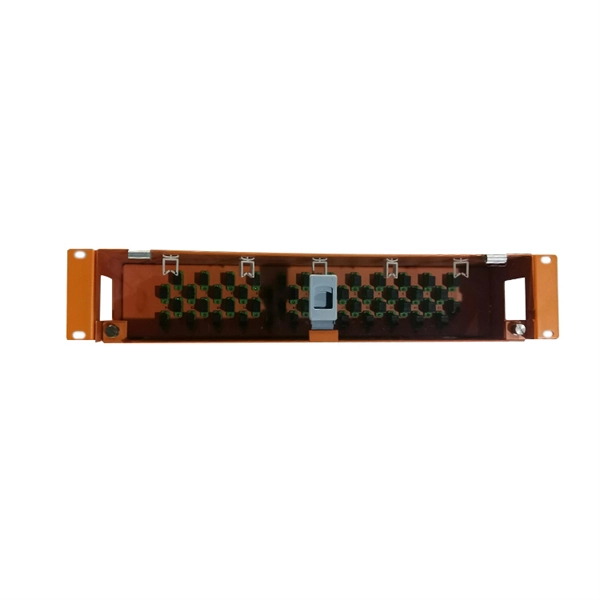
Illustrative equipment image

Luxtron® M-1200 Fiber Optic Temperature Converter

Compact EtherCAT Luxtron® M-1200 fiber‑optic temperature converter with fast, accurate sensing for semiconductor, medical, and industrial monitoring.

Luxtron M-900 Fiber Optic Temperature Converter

The Luxtron M900 series FluorOptic® Thermometry (FOT) solutions comprise fiber-optic temperature sensors designed to provide precise and repeatable in-situ temperature measurements for control of

FOT Temperature Sensor

Laboratories, Process, R&D Description FISO''s Fiber Optic Temperature (FOT) sensors are perfectly suited for harsh environmental conditions such as in cryogeni. s, nuclear and strong RF

FOT Embeddable Temperature Sensor | Roctest

Our fiber optic temperature gauges are based on the thermal expansion of highly stable glass, allowing precise, stable, and repeatable measurements. FOT-N is

Fiber Optic Temperature Sensing and Measurement

Measure temperature with fiber optic sensors for high-resolution distributed and multipoint monitoring in batteries, processes, and harsh environments.

FISO Fiber Optic Temperature Sensors

FISO''s Fiber Optic Temperature Sensors provide accurate, stable, and repeatable measurements. These measurements are based on variations of the reflected light — when compared to the emitted

PORTFOLIO BROCHURE FOTEMP

The FOTEMP series fiber optic sensors, consisting of Gallium Arsenide (GaAs) crystal mounted at the end of an optical fiber, are the best choice for measuring temperatures in environments exposed to

Fiber optic sensors

Our fiber optic sensors use a Gallium Arsenide (GaAs) crystal at the fiber tip, making them ideal for highly accurate temperature measurements in environments

FOTEMP TS Series Fiber Optic Temperature Probes

High precision FOTEMP TS fiber optic temperature probes are for operating environments where conventional electronic-based temperature sensors, thermocouples, thermisters and RTDs are

Optical Fiber Sensors for High-Temperature Monitoring:

This paper reviews the sensing principle, structural design, and temperature measurement performance of fiber-optic high-temperature sensors,

Optical Fiber Based Temperature Sensors: A Review

Among all the reported applications, optical waveguides have been widely exploited to measure the physical and chemical variations in the

Optical Fiber Sensors for High-Temperature Monitoring: A Review

High-temperature measurements above 1000 °C are critical in harsh environments such as aerospace, metallurgy, fossil fuel, and power production. Fiber-optic high-temperature sensors are

FOT Embeddable Temperature Sensor | Roctest

Description FOT-N temperature transducer combines all the desired characteristics expected from the ideal sensor. Its compact size, immunity to EMI/RFI/lightning, resistance to corrosive environments,

Fiber Optic Temperature Sensor 0°C to 120°C

FOT-HERO is a fiber optic temperature sensor specifically designed for use in Electronic Explosive Device (EED) and HERO-type testing applications.

Fiber optic temperature sensor / for hazardous areas

The FOT-L-SD and FOT-L-BA are fi ber optic temperature sensors perfectly suited for harsh environmental conditions such as in cryogenics, nuclear, microwave, and strong RF applications.

MC-00028R9_FOT-L dd

Both FOT-L temperature sensors feature complete immunity to EMI and RFI, miniature size, built-in safety for hazardous environments, extreme temperature resistance, high precision, and resistance

FOT Lumasense Technologies (Lab Kit) | ArtisanTG™

The Lumasense Technologies FOT Lab Kit is a fiber optic thermometry system that allows users to measure temperature where conventional sensors fail.''s unique technology, called Fluoroptic

FOT Embeddable Temperature Sensor Smartec SA [Monitoring

FOT-N temperature transducer combines all the desired characteristics expected from the ideal sensor. Its compact size, immunity to EMI/RFI/lightning, resistance to corrosive environments, high accuracy

Related Video Reference

This video was associated with the source search result. Verify technical details against current product documentation and project requirements.

Share your network requirements

Share the fiber interfaces, termination capacity, cable route and evidence required for handover.

Send a project brief