
Technical notes
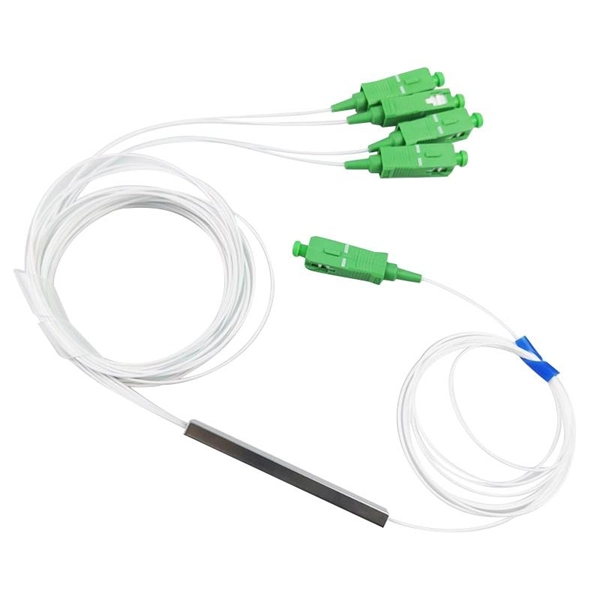
Fused Fiber Optic WDMs
Fused Fiber Optic WDMs Thorlabs'' Wavelength Division Multiplexers (WDMs), also known as wavelength combiners or splitters, are used to combine or separate signals. We offer 2-wavelength
Wavelength-division multiplexing
OverviewSystemsCoarse WDMDense WDMEnhanced WDMShortwave WDMTransceivers versus transpondersSee also
In fiber-optic communications, wavelength-division multiplexing (WDM) is a technology which multiplexes a number of optical carrier signals onto a single optical fiber by using different wavelengths (i.e., colors) of laser light. This technique enables bidirectional communications over a single strand of fiber (also called wavelength-division duplexing) as well as multiplication of capacity.
Wavelength Division Multiplexing – WDM, coarse, dense, optical fiber
Wavelength division multiplexing is a kind of frequency division multiplexing — a technique where optical signals with different wavelengths are combined, transmitted together, and separated again.
2-Wavelength, Polarization-Maintaining WDMs
Thorlabs'' Fused Polarization Maintaining (PM) Wavelength Division Multiplexers (WDMs) combine two wavelengths of light in PM fiber while maintaining the
Fused Wavelength Division Multiplexer(1310/1550nm)
Based on the proven Fused Biconic Taper (FBT) technology, these multiplexers provide broad operating wavelengths and low insertion loss. All our WDM are available with any connector style (FC as
980/1550 Fused Wavelength Division Multiplexer: A Complete Guide
The longer you work with fiber optics, the more you appreciate components like this. The 980/1550 Fused WDM doesn''t just combine or split light; it keeps your system balanced, efficient,
Applications of Polarization-Maintaining Fused WDM in Fiber Optic
The Polarization Maintaining Fused WDM (Wavelength Division Multiplexer) serves as a cornerstone technology in precision sensing applications where both wavelength selectivity and
Wavelength-Division Multiplexing (WDM)
We produce fiber-coupled Wavelength-Division Multiplexing (WDM) devices that combine (Mux) or separate (DeMux) multiple wavelength channels into or from a single optical fiber. Two types are
Wavelength Division Multiplexers (WDM)
At MEETOPTICS, you can find and compare Wavelength Division Multiplexers (WDMs) for combining or splitting light at two different wavelengths. MEETOPTICS offers a variety of multiplexers with
What is Wavelength Division Multiplexing (WDM): A
Introduction to Wavelength Division Multiplexing (WDM) Wavelength Division Multiplexing (WDM) is a fiber optic transmission technique that
Wavelength Division Multiplexing (WDM) | Springer Nature Link
Wavelength division multiplexing or WDM allows the combining of a number of independent information-carrying wavelengths onto the same fiber, because of the wide spectral
Optically Multiplexed Systems: Wavelength Division Multiplexing
As the different WDM channels could traverse the fiber without cross talk, and EDFA can amplify these signals simultaneously, it increased the transmission rates exponentially. This ushered
Exploring the Future of Optical Networks with Fused WDM Technology
Fused Wavelength Division Multiplexing (WDM) is a game-changing technology that enables multiple optical signals to be transmitted over a single fiber. This approach uses different
WDM 101 | Optical Communications | Corning
WDM Multiplexers and Demultiplexers combine and separate different wavelengths (colors) of light signals on a common fiber connection. This WDM technology can
Wavelength Division Multiplexers (WDM)
Wavelength Division Multiplexing (WDM) is a technique in fiber-optic communication systems that enables multiple optical signals with different wavelengths to be combined, transmitted, and
How Wavelength Division Multiplexing (WDM) Works
Discover how Wavelength Division Multiplexing (WDM) uses light to exponentially increase data transmission capacity in fiber optics.
PM Fused WDM: Efficient Optical Signal Multiplexing
PM Fused WDM: A Versatile Solution for Optical Signal Multiplexing Introduction GEZHI offers a wide range of PM Fused WDM (Polarization Maintaining Fiber fused biconical taper
How is a fused coupler used for the fiber communication purpose?
A fused Wavelength Division Multiplexer (WDM) is also known as wavelength combiners or splitters. It is used to combine or separate signals and it is the ideal solution for combining pump and
Related Video Reference
This video was associated with the source search result. Verify technical details against current product documentation and project requirements.