
Introduction To Splitters Teledyne Vision Solutions
Search optical fiber, connectivity, cable management and network infrastructure references.
- Introduction
- Splitters
- Teledyne
Articles and technical references
8 on this page-
Epon Device Product Introduction and Network Structure
It consists of Optical Line Terminals (OLT), and more than one Optical Network Units (ONUs) and connected through the Optical Distribution Network (ODN). The ODN is an optical access network without any active electronic devices between OLT and ONU. PON was raised in. PON...
[PDF Version]
-
Technical Introduction to Optical Cable Project
The FOA created its Online Reference Guide to provide a more up-to-date and unbiased reference for those seeking information on cabling and fiber optic technology, components, applications and installation. As the backbone of modern communication networks, fiber optics...
[PDF Version]
-
Methods to reduce optical decay in beam splitters
This paper reviews the on-chip beam splitting methods in recent years, which are mainly divided into the following categories: y-branch, multimode interference coupling, directional coupling, and inverse design. The simplest solution for a camera or microscope as well...
[PDF Version]
-
Are beam splitters active devices
A beam splitter is an optical instrument that divides an incoming light beam into two or more separate beams. This passive device uses a specialized surface designed to both reflect and transmit light simultaneously. In its. Beam splitters are used in a wide range of fields...
-
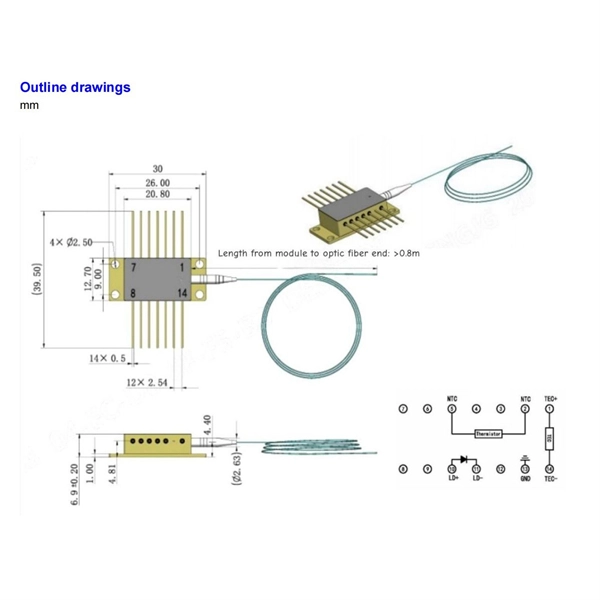
Introduction to QSFP Optical Modules
The QSFP+ optical module, the 40G optical module, is a compact optical module for data communication applications. It has four independent optical signal transmission and reception channels, which are mainly used for high-speed data transmission of switches, routers and data...
[PDF Version]
-
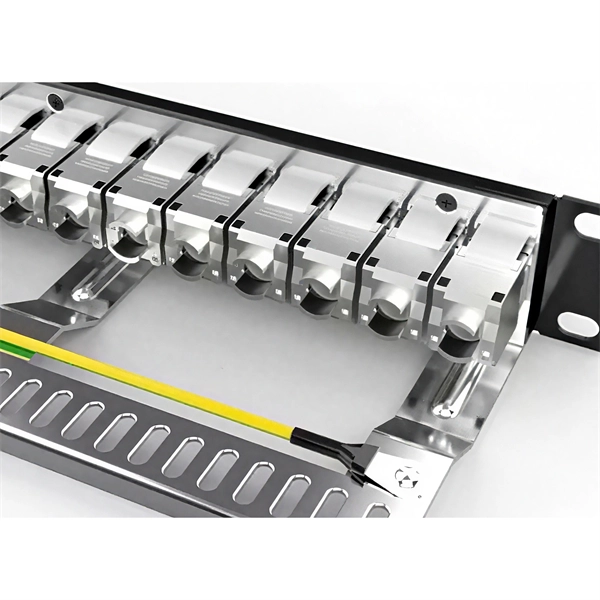
Principles of Beam Splitters and Wavelength Division Multiplexing
In fiber-optic communications, wavelength-division multiplexing (WDM) is a technology which multiplexes a number of optical carrier signals onto a single optical fiber by using different wavelengths (i.e., colors) of laser light. This technique enables bidirectional...
[PDF Version]
-
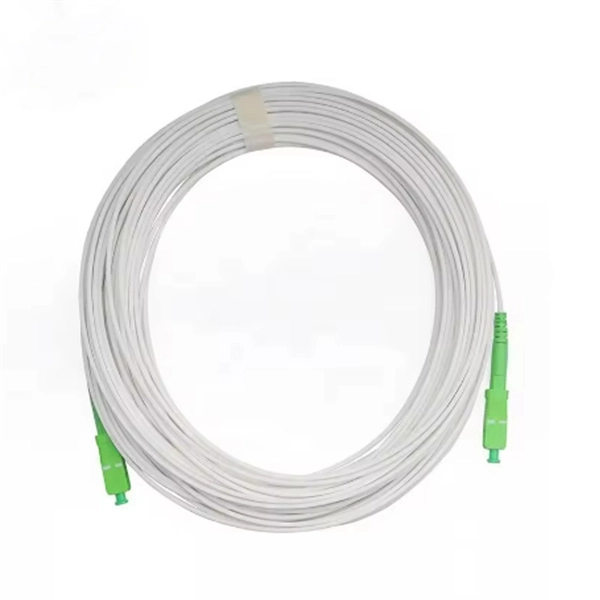
High Temperature Resistance Solutions for Fiber Optic Distribution Frames in Data Centers
Explore how to select the right fiber optic cable for challenging environments including high temperatures, extreme cold, salt spray, humidity, underground ducts, and direct burial. Learn about ADSS, OPGW, GYTA53, LSZH, and more—compliant with IEC, IEEE, UL, and RoHS. Thanks...
[PDF Version]
-
Introduction to Tower Base Station Communication Equipment
Telecommunication towers, often called cell towers or cellular base stations, are robust steel structures engineered to transmit and receive radio frequency (RF) signals, enabling wireless communication across 2G, 3G, 4G, and 5G networks. They are referred to as cell towers...