
Technical notes
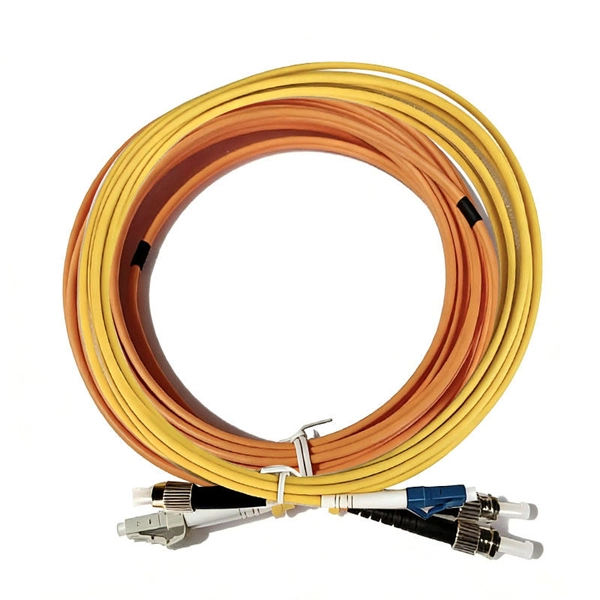
Optical Components and Modules
The monitoring product family includes advanced modules such as OCM and OTDR, as well as simpler pigtail integrated PD, tap or WDM PD in single-channel and array packages.
Cisco QSFP-DD 400G ZR/ZR+ Low Power Consumption Coherent
Cisco® QSFP-DD 400G ZR/ZR+ low-power coherent optical modules provide power savings in high-port-density switch/router platforms for 400 Gigabit Ethernet (400GE) traffic over amplified
The Most Comprehensive Guide Of Optical Modules
Explore the ultimate guide to optical modules. Learn types, functions, performance metrics & how to choose the right module for your fiber network.
Optical networking ICs | TI
Build high-performance and power-efficient optical modules for wireless, data center and communication applications with our optical networking ICs. Our products simplify designs by integrating
Optical and optoelectronics modules | An overview
We manufacture individual optical and optoelectronics OEM modules for our customers. The tasks and solutions are diverse and range from classic lenses
Optical multiplexing techniques and their marriage for on-chip and
Herein, an attention-grabbing and up-to-date review related to major multiplexing techniques is presented which includes wavelength division multiplexing (WDM), polarization division multiplexing
Optical module – A comprehensive exploration
What is an optical module? The optical module is one of the core components of the optical communication system. The optical module is
Review of Packaging of Optoelectronic, Photonic, and
This paper reviews the packaging of optoelectronic, photonic, and microelectromechanical systems (MEMS) components. State-of-the-art
Optoelectronic Module with Integrated Transceiver and Mux-Demux
The TRx module has been implemented using two different wavelengths, 850 and 1060 nm, to send and receive signals simultaneously through a common optical interface while optimizing
Optical module – A comprehensive exploration
The optical module is composed of optoelectronic devices, functional circuits, and optical interfaces. It mainly performs photoelectric and electro-optical conversion, that is, the transmitting
What is a combo port in Ethernet?
A combo port is an Ethernet interface featuring RJ45 and SFP ports. This optoelectronic multiplexing interface supports two physical layers and shares the same port fabric and switch fabric. The two
Edge-guided inverse design of digital metamaterial
This study demonstrates a 38.2 Tbit/s optical interconnect using silicon photonic circuits, combining wavelength- and mode-multiplexing with high
Trends in Optoelectronic IC for Recent Optical Module and Photonics
This is an introductory article for IC researchers and engineers to understand the main issues in current optical module and photonics integration. We will start from the bandwidth demand drivers, an
Everything You Need to Know About Optical Modules
Optical modules are electronic devices used in communication systems to transmit optical signals. These modules convert electrical signals into optical
Optical Signal Multiplexing/Demultiplexing | Springer Nature Link
At the same time, they should be transmitted simultaneously — generally through an optical fiber. The devices which combine and separate (multiplex and demultiplex) different information channels will
How to Choose Optical Modules Correctly?
How Optical Modules Operate Transmitter Optical Sub Assembly (TOSA) The TOSA manages light emission, converting electrical signals to optical signals. It comprises a light source,
On-chip optical matrix-vector multiplier based on mode division
Abstract A matrix-vector multiplication (MVM) optical signal processor based on mode division multiplexing (MDM) was proposed and demonstrated in the current work, which is composed
Optical multiplexing techniques and their marriage for on-chip and
DOI: 10.29026/oea.2022.210127 Optical multiplexing techniques and their marriage for on-chip and optical fiber communication: a review Svetlana Nikolaevna Khonina 1,2 *, Nikolay Lvovich Kazanskiy
Related Video Reference
This video was associated with the source search result. Verify technical details against current product documentation and project requirements.