
Protective Relays Types Working Principle And Uses
Search optical fiber, connectivity, cable management and network infrastructure references.
- Protective
- Relays
- Types
Articles and technical references
7 on this page-
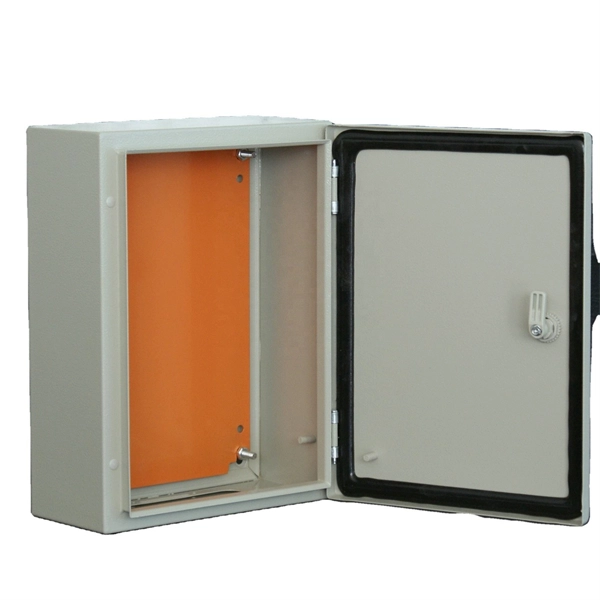
Working principle of voltage stabilizing distribution box
A voltage stabilizer is a device that stabilizes the output voltage. It is composed of a voltage regulation circuit, a control circuit, and a servo motor. They work carefully behind the scenes to guarantee that the electricity flowing via our wires remains within limitations...
-
Working principle of immersion optical modules
In immersion lithography, light travels down through a system of lenses and then a pool of water before reaching the photoresist on top of the wafer. Immersion lithography is a technique used in semiconductor manufacturing to enhance the resolution and accuracy of the. In the...
-
What is the working principle of a voice-controlled light-sensing module
Here's the core idea behind a sound–light controlled lighting fixture (often called “sound-and-light switch”): the lamp turns on only when it's dark enough (light sensor says “night”) and a sound event (clap/voice/door noise) is detected. The lighting control device is...
[PDF Version]
-
Working Principle of Non-Contact Fiber Bragg Grating Sensors
A Fiber Bragg Grating (FBG) reflects a specific wavelength of light, which shifts in response to variations in temperature and/or strain. The refractive index is permanently changed according to the exposed light intensity. This is achieved by creating a periodic variation in...
[PDF Version]
-
Working principle of fiber optic circulators
An optical circulator is a three- or four-port designed such that entering any port exits from the next. This means that if light enters port 1 it is emitted from port 2, but if some of the emitted light is reflected back to the circulator, it does not come out of port 1 but...
-
Working Principle of Parallel Plane Spectrum Splitter
Beam splitters in PON networks are often made with single-mode optical fiber, by exploiting evanescent wave coupling between a pair of fibers to share the beam between them. The splitter is constructed by fusing together the two parallel bare fibers at one point. OverviewA...
[PDF Version]
-
Working principle of frame-mounted beam splitter
These beamsplitters are made by coating the hypotenuse of dual prisms with a partially reflecting material and joining them together using optical or epoxy cement. Beamsplitters are fundamental components in optical engineering, serving to precisely divide a single input beam...