
Technical notes
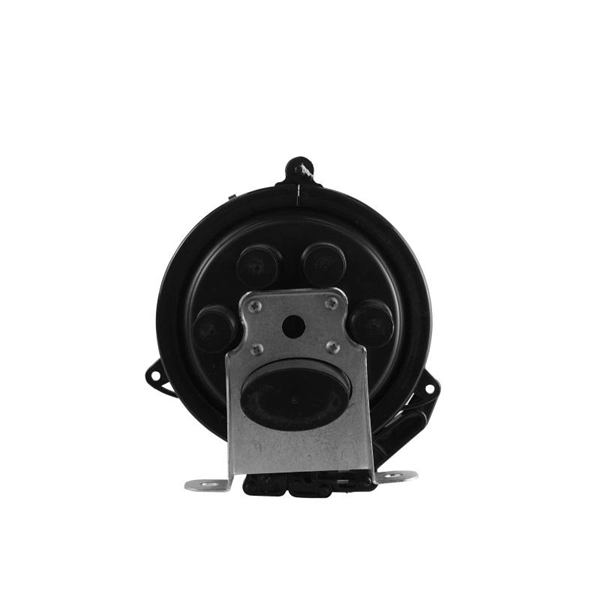
Auxiliary Relay In Electrical Protection Systems
Auxiliary relay devices support protective relays by extending contact capacity, amplifying signals, and enabling remote control. Common in switchgear and
The essentials of necessary auxiliary relays in tripping
Auxiliary relays with four changeover contacts are aimed to supervise the failure of trip supply. Connecting the relay across the trip circuit
Power Relay essential auxiliary component
These protect relay coils from voltage spikes, preventing damage to relays and associated circuits. They ensure smooth coil turn-off and reduce electrical interference.
Auxiliary relays
It is used as a tripping relay or as a protective multi-contact output relay. It has a high breaking capacity, good contact reliability and is free from risk of contact
Basic protection relay knowledge
A fast and selective arc fault mitigation for air-insulated LV & MV switchgear and Relion protection and control relays and sensor technology protect staff and plant facilities for many years.
A Guide to Auxiliary Contacts | RS
This article delves into the world of auxiliary contacts, also known as auxiliary contactors, control relay auxiliary contacts, or auxiliary switch blocks. We''ll explore their functionalities,
Auxiliary relay P8n, PN8n
The auxiliary relays P8n and PN8n are instantaneous, auxiliary plunger type relay with 7 double interruption contacts. They are used in installations where high
Trip, supervision and auxiliary relays
Our offering includes a complete range of auxiliary, trip, lockout and contactor relays specially designed for the most demanding environments. Millions of Arteche
Auxiliary Relays
Installed in more than 150 countries, our auxiliary relays are the best choice for applications such as safety critical logics in nuclear power plants, galvanic isolation between circuits or interface, contact
Auxiliary relays
These relays are especially suitable for protection and control circuits, highly corrosive environments, or regions where there is an increased expectation of seismic activity.
Transformer Protection Application Guide
Transformer Protection Application Guide This guide focuses primarily on application of protective relays for the protection of power transformers, with an emphasis on the most prevalent protection schemes
M mini contactors relays
M mini contactor relays are a high performance but space saving solution used for control functions or for switching small loads up to 6 A. Keyword: M contactor relays M Mini contactor relays Mini
auxiliary relay
Power System Protection and Automation by P.S.R. Murty: This comprehensive textbook covers various aspects of power system protection, including a dedicated section on auxiliary relays. Protective
Power System Protective Relays: Principles & Practices
Abstract: Protective relays and devices have been developed over 100 years ago to provide “last line” of defense for the electrical systems. They are intended to quickly identify a fault and isolate it so the
Protective Relays: Types, Working Principle & Uses
Learn how protective relays detect faults, trip breakers, coordinate protection zones, and protect feeders, transformers, motors, generators, and lines.
Auxiliary and Lockout (86) Relays
An important type of “accessory” relay, especially for legacy electromechanical protective relays, is the so-called auxiliary or lockout relay, designated by the ANSI/IEEE number code 86.
Auxiliary Relay In Power Systems
How does an auxiliary relay differ from a regular protective relay? While both auxiliary and protective relays play crucial roles in electrical systems, their functions differ.
Auxiliary Protection Relays | Schneider Electric Australia
Auxiliary protection relays include all the necessary devices needed to complete your protection scheme. With tripping relays, supervision, time delays or control
Related Video Reference
This video was associated with the source search result. Verify technical details against current product documentation and project requirements.