
Vibration Sensor Working Principle And Applications
Search optical fiber, connectivity, cable management and network infrastructure references.
- Vibration
- Sensor
- Working
Articles and technical references
8 on this page-
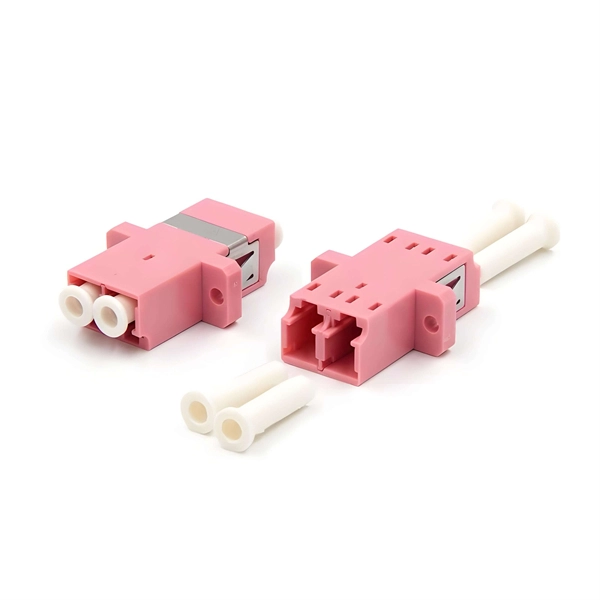
Working Principle of the Fiber Optic Temperature Sensor in Afghanistan
The principle of operation is based on the temperature dependence of the bandgap of GaAs. The GaAs crystal fixed on the tip of the fibre will be transparent at a wavelength above 850 nm. The position of the band edge is temperature-dependent and is shifted about 0.4 nm/K. The...
[PDF Version]
-
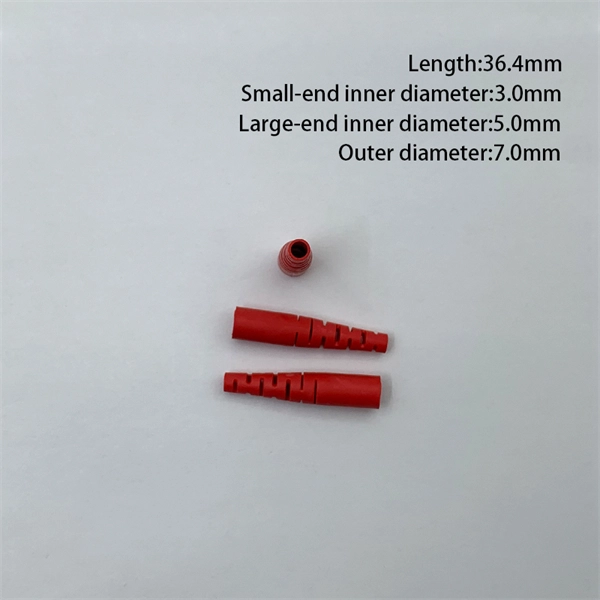
Working principle of voltage stabilizing distribution box
A voltage stabilizer is a device that stabilizes the output voltage. It is composed of a voltage regulation circuit, a control circuit, and a servo motor. They work carefully behind the scenes to guarantee that the electricity flowing via our wires remains within limitations...
-
Working principle of immersion optical modules
In immersion lithography, light travels down through a system of lenses and then a pool of water before reaching the photoresist on top of the wafer. Immersion lithography is a technique used in semiconductor manufacturing to enhance the resolution and accuracy of the. In the...
-
What is the working principle of a voice-controlled light-sensing module
Here's the core idea behind a sound–light controlled lighting fixture (often called “sound-and-light switch”): the lamp turns on only when it's dark enough (light sensor says “night”) and a sound event (clap/voice/door noise) is detected. The lighting control device is...
[PDF Version]
-
Working Principle of Non-Contact Fiber Bragg Grating Sensors
A Fiber Bragg Grating (FBG) reflects a specific wavelength of light, which shifts in response to variations in temperature and/or strain. The refractive index is permanently changed according to the exposed light intensity. This is achieved by creating a periodic variation in...
[PDF Version]
-
Fiber Optic Sensor Liquid Level Detection Principle
Fiber optic liquid level sensor s have revolutionized various industries by offering high-speed and accurate measurements, especially in challenging environments. These sensors rely on the principles of light reflection and refraction to detect changes in the liquid level.
-
Ecuadorian fiber optic vibration sensor
We report on a compact, highly sensitive all‐fiber accelerometer suitable for low frequency and low amplitude vibration sensing. The sensing elements in the device are two short segments of strongly coupled asymmetric multicore fiber (MCF) fusion spliced at 180° with...
[PDF Version]
-
Working principle of fiber optic circulators
An optical circulator is a three- or four-port designed such that entering any port exits from the next. This means that if light enters port 1 it is emitted from port 2, but if some of the emitted light is reflected back to the circulator, it does not come out of port 1 but...