Skip to content
QK FIBERSystems Send a project enquiry
Reference library

Relay Protection and Electromagnetic Induction

Published
  • Relay
  • Protection
  • Electromagnetic
Source context

AI source overview

Electromagnetic induction forms the core principle behind protective relays, enabling them to detect faults and operate circuit breakers to safeguard electrical systems.

Overview of Relay Protection

Relay protection is a critical aspect of power system safety, designed to detect abnormal conditions such as overcurrent, overvoltage, under-frequency, or reverse power flow, and to trip circuit breakers to isolate faulty sections of the network. Protective relays act as the "eyes" of the system, ensuring reliability and preventing damage to equipment.

Electromagnetic Relays

Electromagnetic relays operate on the principle of electromagnetic induction, where a current flowing through a coil generates a magnetic field that moves a mechanical armature to open or close contacts. This allows low-power control circuits to switch high-power loads safely, providing electrical isolation and signal amplification. Key components include: Coil and ferromagnetic core: Generates the magnetic field when energized.

Movable armature: Mechanically linked to contacts to open or close circuits. Contacts: Switch the load circuit based on the armature movement. Electromagnetic relays are widely used in industrial and power systems for overcurrent protection, voltage regulation, and system stability.

Induction Relays

Induction relays, a type of electromagnetic relay, are specifically designed for AC quantities and operate similarly to induction motors. They consist of a pivoted aluminum disc placed in two alternating magnetic fields that are phase-shifted. The interaction of these fields induces eddy currents in the disc, producing torque that moves the disc to actuate contacts.

Important points include: Maximum torque occurs when the two AC fluxes are 90 degrees apart. The torque is proportional to the product of the fluxes, allowing precise detection of overcurrent or power conditions. Induction relays are not suitable for DC circuits due to their reliance on alternating magnetic fields.

Working Principle in Protective Relays

Protective relays use electromagnetic induction to sense electrical quantities and respond to faults. For example, in an induction disc overcurrent relay, the primary winding receives current from a current transformer, inducing eddy currents in the disc. The resulting torque rotates the disc, closing the relay contacts after a predetermined time delay, which trips the circuit breaker.

This mechanism ensures selective and reliable protection.

Applications

Overcurrent protection: Detects excessive current and isolates the fault. Voltage and frequency protection: Monitors abnormal voltage or frequency deviations. Power system stability: Maintains safe operation by coordinating multiple relays.

Industrial control: Electromechanical relays are used in motor starters, contactors, and automation systems. Electromagnetic relays, despite the advent of microprocessor-based relays, remain widely used due to their robustness, long lifespan, and simplicity. In summary, relay protection relies heavily on electromagnetic induction, with electromechanical and induction relays forming the backbone of traditional protective schemes.

Their ability to convert electrical quantities into mechanical motion allows precise, reliable, and timely operation of circuit breakers, ensuring the safety and stability of electrical systems.

Research context

Reference summary

Electromechanical relays can be classified into several different types as follows: "Armature"-type relays have a pivoted lever supported on a hinge or knife-edge pivot, which carries a moving contact. These relays may work on either alternating or direct current, but for alternating current, a shading coil on the pole is used to maintain contact force throughout the alternating current cycle. Because the air gap between t.

Additional context

Source notes

Electromechanical relays can be classified into several different types as follows:
"Armature"-type relays have a pivoted lever supported on a hinge or knife-edge pivot, which carries a moving contact. These relays may work on either alternating or direct current, but for alternating current, a shading coil on the pole is used to maintain contact force throughout the alternating current cycle. Because the air gap between t…

From reference to enquiry

Questions for your project

Use these editorial prompts alongside the linked excerpts. They identify items to confirm for your project.

Technical notes

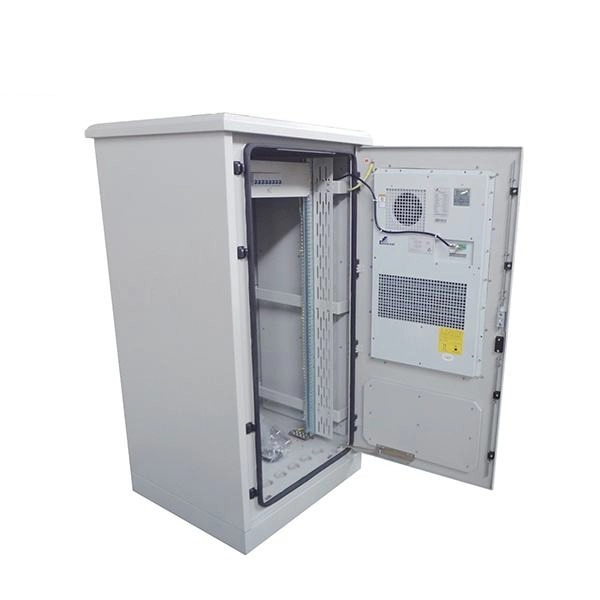
Illustrative equipment image

Electromagnetic Induction Relay

Electromagnetic Induction Relay – Structure and Working Principle: Electromagnetic induction relay operate on the principle of induction motor and are widely used

Protective relay

OverviewTypes according to constructionOperation principlesRelays by functionsPower source

Electromechanical relays can be classified into several different types as follows: "Armature"-type relays have a pivoted lever supported on a hinge or knife-edge pivot, which carries a moving contact. These relays may work on either alternating or direct current, but for alternating current, a shading coil on the pole is used to maintain contact force throughout the alternating current cycle. Because the air gap between t

Electromagnetic Relay Working | Types of Electromagnetic Relays

Use of relay contact protective devices or protection circuits for an inductive load can suppress the counter EMF (electromotive force or electromagnetic field) to a low level.

What is an Induction Disc Relay – A Complete Explanation

An induction disc relay is an electromechanical protection relay that uses magnetic flux and a rotating disc to detect faults and operate circuit breakers.

Electromechanical Relay: Working Principle, Types, and

The working principle of an electromechanical relay is based on electromagnetic induction. When current flows through the relay coil, it creates a

Protective Relay Basics

The objective of this presentation is to convey a basic understanding of protective relays to an audience of engineers already familiar with low voltage protective device coordination.

What is Electromagnetic Relay?

Electromagnetic relays are those relay which operates on the principle of electromagnetic attraction. The electromagnetic relay is mainly classified into two types they are electromagnetic attraction relay and

Types of Electromagnetic Relays | Induction Disc | Induction Cup Relay

Induction relays are widely used for protective relaying involving a.c. quantities. High, low and adjustable speeds are possible, and various shapes of time/ operating quantity curves can be obtained.

Principle of Induction Type Relays

Visit Induction Relay – Construction Detail to know about constructional feature of Induction Relay. Electromagnetic-induction relays use the principle of the induction motor where

Types and Revolution of Electrical Relays

Types and Revolution of Electrical Relays Introduction: Protective relays work in concert with sensing and control devices to accomplish their function. Under normal power system operation, a protective

Controlling Inductive Devices: Managing Induction

Controlling a inductive load using our relay controllers requires the use of induction suppression capacitors. The purpose of this capacitor is to absorb the high

Relay Contact protection of inductive load and maintain electrical

I''ve been reading Henry Ott''s Electromagnetic Compatibility Engineering and one of the chapters is about contact protection. Looking at the various protection mechanisms to prevent or

What is Electromagnetic Relay?

What is Electromagnetic Relay? Relays that work on the principle of electromagnetic attraction are known as electromagnetic relays. The magnet is used to create a magnetic field,

Comparison of Protection Relay Types

This comparison summarize characteristics of all protection relay types described in previously published technical articles:

Relay Contact Protection Circuits

Use of relay contact protective devices or protection circuits for an inductive load can suppress the counter EMF (electromotive force or electromagnetic field) to a low level. However,

Relays Part 4: The Protective Relay Basic Theory

The protective relays operate under two principles electromagnetic induction and electromagnetic attraction. The types of protective relays that exist are overcurrent,

Electromagnetic Relay

Electromagnetic Relay – Definition, Construction and Working Principle: Electromagnetic Relay – A relay, in the general sense of the word, is any apparatus which serves to actuate or control the

Protective Relays: Overcurrent and Safety Relays | TE

Sometimes known as monitoring relays, protective relays have two functions: switching (trip) and measuring (the monitored value that leads to a trip). Most protective relays are electromechanical,

Related Video Reference

This video was associated with the source search result. Verify technical details against current product documentation and project requirements.

Share your network requirements

Share the fiber interfaces, termination capacity, cable route and evidence required for handover.

Send a project brief