Skip to content
QK FIBERSystems Send a project enquiry
Reference library

Relay Protection Information Processing System

Published
  • Relay
  • Protection
  • Information
Source context

AI source overview

A Relay Protection Information Processing System (RPIPS) is a comprehensive platform for managing protective relays and IEDs, ensuring accurate, reliable, and standards-compliant power system protection.

Overview

A Relay Protection Information Processing System (RPIPS) is designed to collect, process, and manage data related to protective relays and Intelligent Electronic Devices (IEDs) in power systems. Its primary goal is to ensure rapid fault detection, isolation, and system stability while maintaining compliance with industry standards such as IEC 61850 and NERC regulations (PRC-023, PRC-025, PRC-026, PRC-027) (IPS ENERGY).

RPIP

S integrates asset management, configuration control, and digital communication to streamline relay settings and operational workflows.

Key Functions

Protective Relay and IED Management RPIPS manages the entire lifecycle of relay settings, from initial change requests to development, approval, commissioning, and final verification. It supports complex data models and hierarchical component structures for efficient tracking and version control (IPS ENERGY). Network Model Management (NMM) Integration Integration with NMM centralizes network models, improving accuracy and consistency of relay settings.

It allows importing data from SCADA, CAPE, and other tools, ensuring that relay configurations reflect current and future network conditions (IPS ENERGY).

Digital Communication Support Modern RPIP

S platforms utilize digital communication networks to transmit relay data efficiently. This ensures fast, reliable, and secure relay operation, which is critical for multi-user environments and complex protection schemes (IEEE Power System Relaying Committee).

Compliance and Standardization RPIP

S ensures adherence to international standards (IEC 61850, IEC 61970) and regulatory requirements. It maintains a master-type library of IEDs and predefined component hierarchies to facilitate standardization and interoperability (IPS ENERGY). Protection Principles Protective relays detect abnormal conditions such as short circuits or overloads and automatically isolate faulted equipment to prevent damage and maintain system stability.

Modern systems use numerical and multifunctional relays for faster, more reliable operation (IEEE SAS-PES).

Examples of RPIPS Implementation

Siemens SIPROTE

C Series: Offers modular relays for line, transformer, generator, motor, and busbar protection. Features include fast 3-pole tripping, flexible I/O, digital twin simulation, and IEC 61850 support for seamless integration and testing (Siemens).

IPS ENERG

Y Solution: Provides component-based asset management, setting workflow management (SWM), and advanced data filtering to support regulatory compliance and operational efficiency (IPS ENERGY).

Benefits

Enhanced Reliability and Security: Rapid fault detection and isolation minimize system disruption. Operational Efficiency: Centralized data and automated workflows reduce manual errors. Regulatory Compliance: Supports NERC and IEC standards for protection and cybersecurity.

Scalability: Can manage multiple relays and IEDs across large networks. Digital Integration: Supports real-time monitoring, simulation, and remote configuration.

Conclusion

A Relay Protection Information Processing System is a critical tool for modern power system protection, combining asset management, digital communication, and compliance features to ensure reliable, fast, and standardized operation of protective relays and IEDs. It enables utilities to maintain system stability, reduce downtime, and optimize maintenance and operational workflows.

Research context

Reference summary

CN201402974Y The relay protection fault information processing system is characterized in that the system consists of a master station at the dispatching e.

From reference to enquiry

Questions for your project

Use these editorial prompts alongside the linked excerpts. They identify items to confirm for your project.

Technical notes

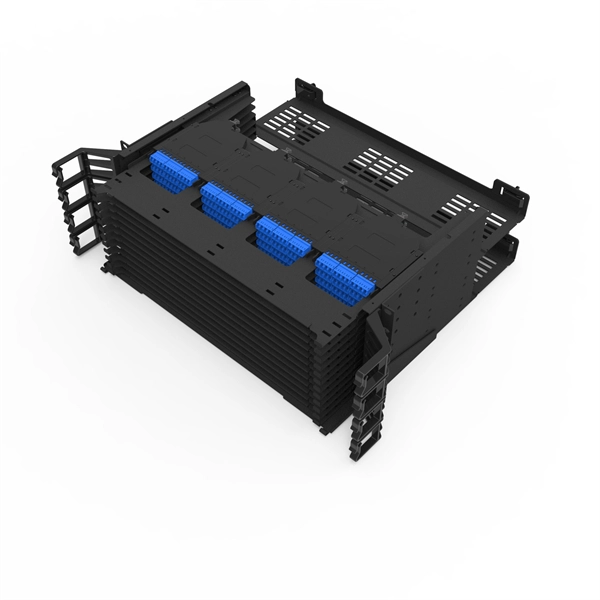
Illustrative equipment image

CN201402974Y

The relay protection fault information processing system is characterized in that the system consists of a master station at the dispatching end and a terminal station at the plant...

(PDF) Relay Protection, Control, and Information Management in the

PDF | The Volume 1 of this book is a compendium of a state of art of the protection systems in the conventional High Voltage AC (HVAC) networks.

Power System Protective Relays: Principles & Practices

Abstract: Protective relays and devices have been developed over 100 years ago to provide “last line” of defense for the electrical systems. They are intended to quickly identify a fault and isolate it so the

Relay Protection, Control, & Information Management

Relay Protection, Control, & Information Management Volume 1 of the book comprises the state of the art of protection systems in the conventional High Voltage AC (HVAC) networks.

Protective Relays and IED Management

Our Protective Relays and IED Management solution offers an extensive library of complex data models and a master-type library for IEDs. Our solution''s advanced integration with

SIPROTEC Protection Relays | Siemens

Siemens'' universal protection relays portfolio includes products such as SIPROTEC 7SX800 and 7SX85 to provide flexibility and cost savings. Our devices cover a wide range of applications and offer

Enterprise Protection Information System

IPS®EPIS is the enterprise-grade software platform that manages the complete lifecycle of your protective relays and Intelligent Electronic Devices, from the initial change request through

Design of relay protection and fault information management system

Seven design principles are adopted in the development of fault information management and analysis system based on data mining technology for relay protection devices: prospective

Research on the remote automatic test technology of the full link of

This article proposes the full-link automatic test technology of the relay protection fault information system, and expounds its principle, main modules and key technologies.

SCHEMATIC REPRESENTATION OF POWER SYSTEM RELAYING

Prepared by Working Group I5 Working Group Assignment presentation of protection and control relaying. The report will identify methodology behind these practices, present issues

(PDF) REVIEW OF MICROPROCESSOR BASED PROTECTIVE RELAYS

The functions of electromechanical protection systems are now being replaced by microprocessor-based digital protective relays, sometimes called "numeric relays".

What is Protection Relay?

A protection relay is a crucial component of electrical systems that safeguard infrastructure, employees, and equipment from electric problems and malfunctions. It functions as a

The Essentials Of Numerical Relays, Their Features And Important

Introduction to numerical relays The distinction between digital and numerical relays is particular to Protection. Numerical relays are natural developments of digital relays due to advances

The Role of Protection Relays in Power Systems and an

Protective relays are critical in power systems because they serve as decision-making devices that ensure the safe operation of power grid. They play a key role in power system protection.

Basic Types of Protection Relays and Their Operation

Protective relays are the building blocks used to develop protection systems. Digital relays held an enormous advantage over any of their predecessors with the new ability to add

Microprocessor-Based Protective Relay Configurations: Effective

The protective relays used in modern industrial installations are complex microprocessor-based devices. Some of them deserve to be called protection programmable logic controllers (PLCs)

Protective Relays: Types, Working Principle & Uses

Protective Relays A practical guide to how protective relays detect faults, trip circuit breakers, coordinate protection zones, and improve power

Power system protection with digital overcurrent relays: A review of

As a consequence, recent studies aimed to provide a reliable protection system capable of responding to the modern power system conditions by propounding the utilization of non-standard

Related Video Reference

This video was associated with the source search result. Verify technical details against current product documentation and project requirements.

Share your network requirements

Share the fiber interfaces, termination capacity, cable route and evidence required for handover.

Send a project brief