Skip to content
QK FIBERSystems Send a project enquiry
Reference library

Distribution Network Automation Protection Calculation

Published
  • Distribution
  • Network
  • Automation
Source context

AI source overview

Distribution network protection calculation involves determining relay setpoints and coordination times to ensure selective, sensitive, and adaptive fault clearing, often using automated methods for modern networks.

Principles of Protection Calculation

Selective short-circuit protection is achieved by grading the operating times of relays so that the relay closest to a fault operates first. This can be implemented using: Time-graded protection: Relays operate in a sequence based on preset time delays. Time- and current-graded protection: Combines time delays with current magnitude to optimize response.

Inverse time relays are commonly used in radial networks because their operating time decreases as fault current increases, improving speed for high-magnitude faults. Definite time relays operate at a fixed time regardless of fault current. Proper grading time between consecutive protection stages is critical to maintain selectivity while avoiding unnecessary delays.

Manual vs Automatic CalculationTraditionally, relay protection setpoints were calculated manually, considering network configuration, load, and fault currents. This process is time-consuming and prone to errors, especially when network configurations change or distributed generation is added. Modern automatic calculation methods use real-time network data to continuously update relay setpoints.

These systems: Receive information from network switching devices and sensors. Calculate protection actuation data based on current network conditions. Ensure selectivity and sensitivity across all permissible network modes.

Adapt to changes in load, distributed generation, and fault conditions without human intervention.

Adaptive Relay Protection

With the integration of distributed generation (DG), conventional overcurrent protection may lose effectiveness due to bidirectional power flows and multipoint fault feeding. Adaptive relay protection systems: Adjust setpoints dynamically based on network operating modes. Coordinate protection devices across multiple substations.

Use network equivalents to limit calculation areas and speed up computation. Store time-series data of voltages and currents to calculate and verify protection parameters.

Types of Protection Calculations

Overcurrent Protection: Determines relay pickup currents and time delays based on expected fault currents. Distance Protection: Calculates impedance to the fault point using measured voltages and currents; trips if impedance falls below a set threshold. Differential Protection: Compares currents at both ends of a line; trips if the vector sum deviates from zero, providing fast and sensitive fault clearing.

Implementation Considerations

Coordination: Grading times and current settings must be coordinated to prevent upstream relays from operating before downstream relays. Standards Compliance: IEC 61850 and other standards guide relay communication and automation. Software Tools: Modern distribution automation systems include microservices for calculating, verifying, and coordinating protection parameters, often using JSON-based input scripts for different relay types.

Key Takeaways

Protection calculation ensures selective, fast, and reliable fault clearing. Automated methods improve accuracy, adaptability, and reduce manual effort. Adaptive protection is essential in networks with distributed generation or complex configurations.

Proper grading, coordination, and real-time data integration are critical for maintaining network stability and minimizing outage impact.

Research context

Reference summary

Method for Automatic Calculation of Current Relay ProtectionThe article compares the results of manual and automatic calculations of protection actuation d.

From reference to enquiry

Questions for your project

Use these editorial prompts alongside the linked excerpts. They identify items to confirm for your project.

Technical notes

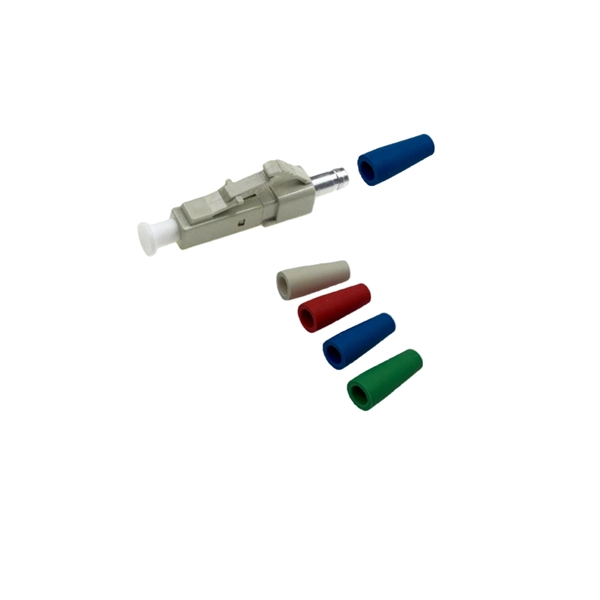
Illustrative equipment image

Method for Automatic Calculation of Current Relay Protection

The article compares the results of manual and automatic calculations of protection actuation data on the example of typical radial sections of the distribution network.

Distribution Automation Handbook

Distance protection determines the impedance to the fault point from the measured voltages and currents at the substation. In the simplest form, the calculated impedance is compared to the set

2023-57(1)-1.vp

The arti-cle compares the results of manual and automatic calculations of protection actuation data on the example of typical radial sections of the distribution network.

Method for Automatic Calculation of Current Relay Protection

Since traditional power system overcurrent RPAs have insufficient sensitivity and speed, this paper proposes new multi-hypothesis methods of recognizing modes of operation in RPA of

Research on Relay Protection Setting Calculation Method for

Abstract: This study proposes a calculation method for relay protection setting in distribution networks based on multi-source data interaction.

Distribution System Analysis and Automation | IET Digital Library

Those pertaining to distribution systems and in particular to the automation of distribution systems (or distribution automation) will be considered in this book.

Automatic Generation Technology for Distribution Network Protection

Therefore, this study investigates an automated generation technique for distribution network protection settings based on integrated Graph Data Model technology.

Distribution Systems Analysis and Automation | IET Digital Library

Some general concepts of control strategies and protection solutions in microgrids are also explained, considering the impacts of high penetration of distributed generation (DG) units and energy

Prospective Relay Protection System for Digital Distribution Networks

With the development of 6 – 35 kV digital distribution networks, the manual calculation and input of operation parameters for relay protection (RP) starts to become problematic. Since

Research on the Adaptive Protection Method for Distribution Networks

Combined with the complex plane relationship of impedance under fault, the short-circuit impedance corresponding to the fault location of the line is calculated, and the method of solving the actual short

Distributed relay protection for distribution network based on hybrid

The distributed power supply is gradually connected to the distribution network, the original single power source radiant network pattern of the distribution network no longer exists. The

Distribution Automation Handbook

8.11.1 Introduction Electric motors are exposed to many kinds of disturbances and stress. Part of the disturbances is due to im-posed external conditions such as over- and undervoltage, over- and

(PDF) Distribution network adaptive protection system based on

Then, a distribution network adaptive protection strategy based on the equivalent impedance of the distributed energy system is proposed, which real-time adjusts the setting value

Distribution Systems Analysis and Automation | IET Digital Library

This book has 13 chapters. The following topics are dealt with:- Smart Grid overview; Distribution automation functions; Fundamentals of distribution system analysis; Short circuit calculation;

A coordinated relay protection strategy of distribution network based

Abstract In order to solve the problem of difficult coordination of traditional overcurrent relay protection caused by short supply radius and little difference of fault current along urban

SARS Home | South African Revenue Service

SARS collects taxes & customs. File returns, check balances & find branches. We build a compliant & prosperous South Africa.

Microsoft Word

This paper proposes the configuration principles and requirements for distributed protection relay protection and safety automatic devices with distributed power supply, which can provide reference

Automated Calculation and Coordination of Protective Relay Settings

Development of new methods of automated coordination of traditional step-type protection and multidimensional protection based on statistical principles is necessary for creation of an

Share your network requirements

Share the fiber interfaces, termination capacity, cable route and evidence required for handover.

Send a project brief